



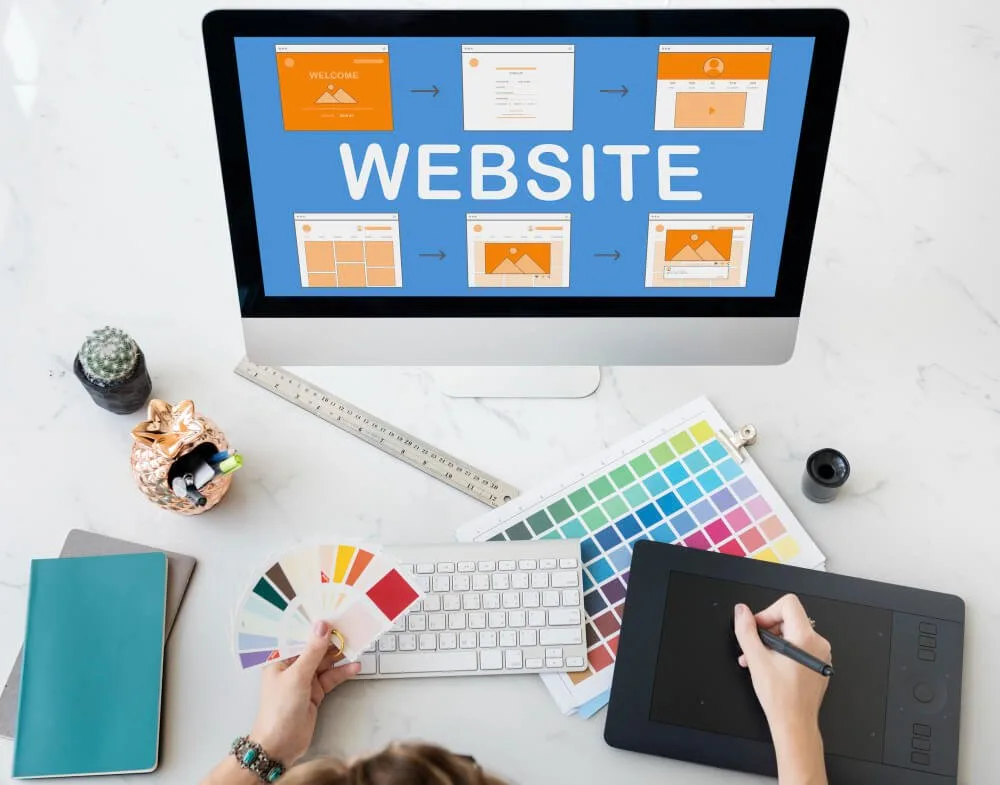
The business website: explain and reassure
A service business can use a business website to present its offers, answer questions and receive enquiries. Visitors discover the business, then contact it. The sale may then require a discussion or a personalised quote.
The key pages are generally the company introduction, services and contact. Their quality depends on clear content and how easy it is to take the next step.
The online shop: sell and manage
An e-commerce website organises products and orders. It involves work on descriptions, prices, availability and delivery methods. Online payment is only one part of the journey: order processing and customer follow-up must also be planned.
Before launching a shop, check who will update the catalogue and handle enquiries. A sales tool requires an operational organisation.
Five questions to help you decide
Can you describe your offer with clear specifications and a price? Can your customers choose without a prior quote? Do you know how to manage stock or availability? Have you defined delivery or service fulfilment? Do you have someone to process orders?
If several answers remain uncertain, a business website may be a first step. If sales are already standardised and your organisation is ready, an online store may meet the need.
The difference between a business website and an online shop lies in the sales journey, not the number of images. First define how the customer chooses and orders, then prepare the scope of your future website by distinguishing presentation needs from commercial operating needs.
| Criterion | Business website | E-commerce |
|---|---|---|
| Objective | Present your business and receive enquiries | Organise purchases |
| Content | Offers and information | Catalogue and product data |
| Management | Content updates | Orders and operations |
| Conversion | Contact or quote | Order |
The context of a business in Morocco
Specify the languages your audience needs and the contact methods. For a shop, have the available payment solutions validated with the selected providers, along with delivery and service terms. These choices vary by partner and should not be assumed.
Illustrative example: a manufacturer who customises every order may prefer a quotation request. A standardised product range may suit a catalogue with ordering. The same sector can therefore have two different needs.
Can you expand later?
Yes, an expansion can be considered, but it depends on the existing architecture and features. A store is more than adding a “buy” button. Product data, accounts, ordering steps and responsibilities need to be prepared.
Mention possible future developments from the outset. This helps assess trade-offs without developing every feature immediately.
Conclusion: choose according to the sales journey
A business website is suited to presenting your offering and generating enquiries. A store is suited to a sufficiently defined purchasing journey. The best choice is the one your business can operate properly and that matches your customers’ behavior.
Frequently asked questions
Can you display products without an online shop?
Yes. A catalogue can inform visitors and guide them towards an enquiry, without integrated payment.
Do you need many products for an online store?
The number is not decisive. What matters is having a suitable offer and sales process.
Is an online catalogue necessarily an e-commerce website?
No. A catalogue can present products and invite visitors to request a quote. An online shop adds an ordering journey and the associated management tasks; these features should be defined before choosing.
What about your project?
Explore our service and contact the agency to discuss your needs.
Discuss creating your website ↗Request a quote ↗