
The logo: identifying the brand
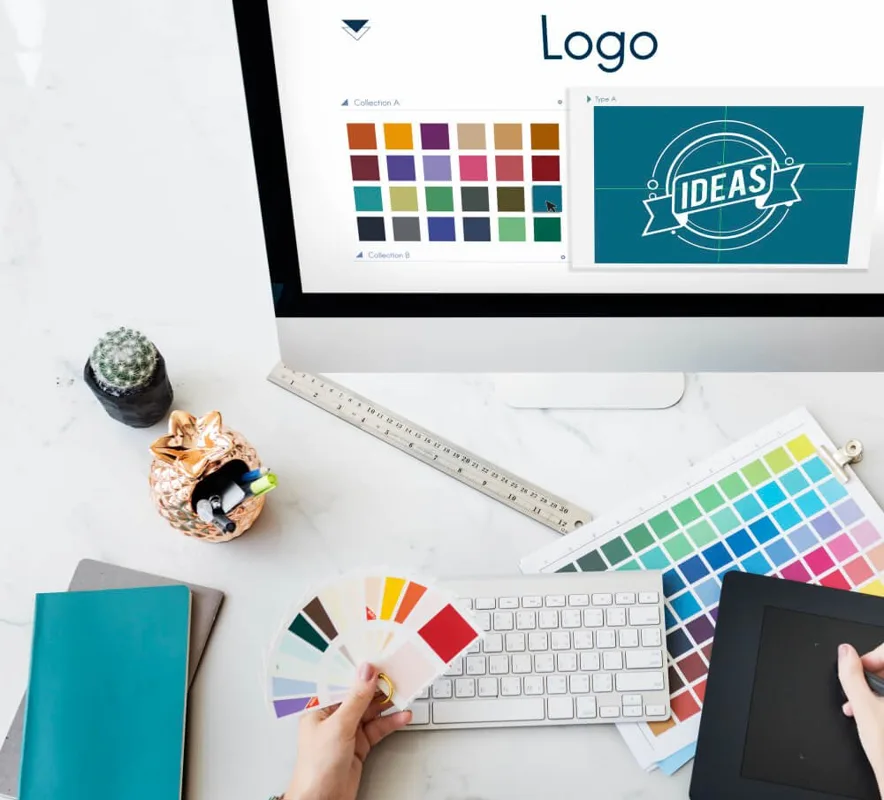
A logo associates a shape, symbol or lettering with a brand name. It should work for its intended uses: a website, social profile, document or print. Legibility is particularly important at small sizes.
A logo does not necessarily describe the whole business. It provides a reference point that customers learn to recognise. Trying to include every service in it can create a mark that is difficult to read.
Identity: building continuity
Visual identity goes beyond the logo. It can bring together a colour palette, typography choices, photo treatments and composition principles. These elements should work together so that materials appear to belong to the same company.
Illustrative example: a brand uses the same colours and a consistent heading hierarchy on its website and posts. Even when the logo is understated, the overall identity remains recognizable.
Brand guidelines: documenting the rules
Brand guidelines explain how to apply the visual identity. They may specify the space around the logo, approved versions, colour references and uses to avoid. Their level of detail depends on the number of materials and people involved.
The document helps limit conflicting interpretations. It becomes particularly useful when several people create content for the brand.
| Element | Role |
|---|---|
| Logo | Identify |
| Visual identity | Create consistency |
| Brand guidelines | Guide implementation |
What level does your company need?
If you are starting with only a few materials, begin by defining the essential uses of the logo and the basic guidelines. If you produce content regularly, a more complete identity helps maintain consistency. If several providers are involved, documented rules make handovers easier.
The right scope does not depend on the name of a package. It depends on the actual tasks and the people who will use the files.
Check the deliverables
Ask for formats suited to screens and print, the available versions and the terms of use. A single image file does not always cover every need. Also clarify the rights relating to fonts, images and third-party elements.
Keep the files somewhere accessible to the business, together with the useful rules. A simple system that is properly handed over is better than a complex presentation that nobody knows how to apply.
Before requesting a visual identity design, distinguish the brand symbol, its variations and the rules for using it. To discuss your intended uses, discover our graphic design work and have the expected formats and rights specified in the quote.
Conclusion: distinguish creation from use
The logo provides a sign, the identity provides consistency and the guidelines provide rules. By explaining your business, materials and constraints, you enable the provider to propose suitable work. The result should be usable every day.
Frequently asked questions
Is a new logo enough to rebuild a brand?
It can be one step, but the consistency of your materials and message must also be examined.
Is a brand guidelines document always lengthy?
No. It should be proportionate to how it will be used and clear enough for the people concerned.
Should you request brand guidelines along with a logo?
It depends on the number of materials and the people using them. Useful rules can clarify colours, logo versions and prohibited uses. The document and its deliverables must be agreed.
What about your project?
Explore our service and contact the agency to discuss your needs.
Build a consistent visual identity ↗Request a quote ↗